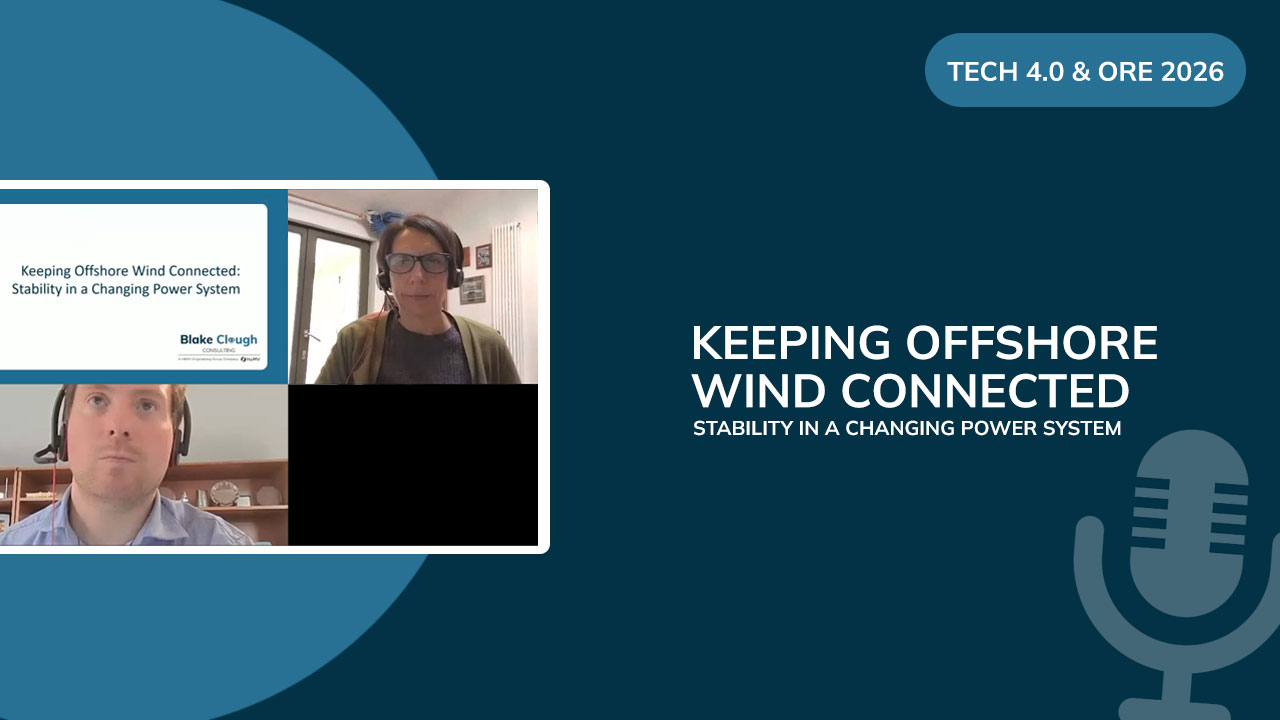
Keeping offshore wind connected: Stability in a changing power system
For offshore wind developers, power system stability can have a direct impact on connection dates, operational output and project revenues. At Blake Clough Consulting, we have seen projects experience prolonged curtailment and delayed connections because stability issues emerged late in development or after commissioning.Our experience points to a clear priority: assess stability early, allow enough time to resolve problems, and keep the studies aligned with the equipment and network conditions the project will actually encounter.
September 22, 2026
Reducing Grid Connection Costs and Timescales Through Competitive Tendering
With grid connection costs rising and delivery timescales becoming increasingly constrained, competitive procurement can give developers greater control. We explore how ICP and self-build routes at Distribution and Transmission level can help reduce costs, improve procurement flexibility and potentially accelerate connection programmes.
September 11, 2026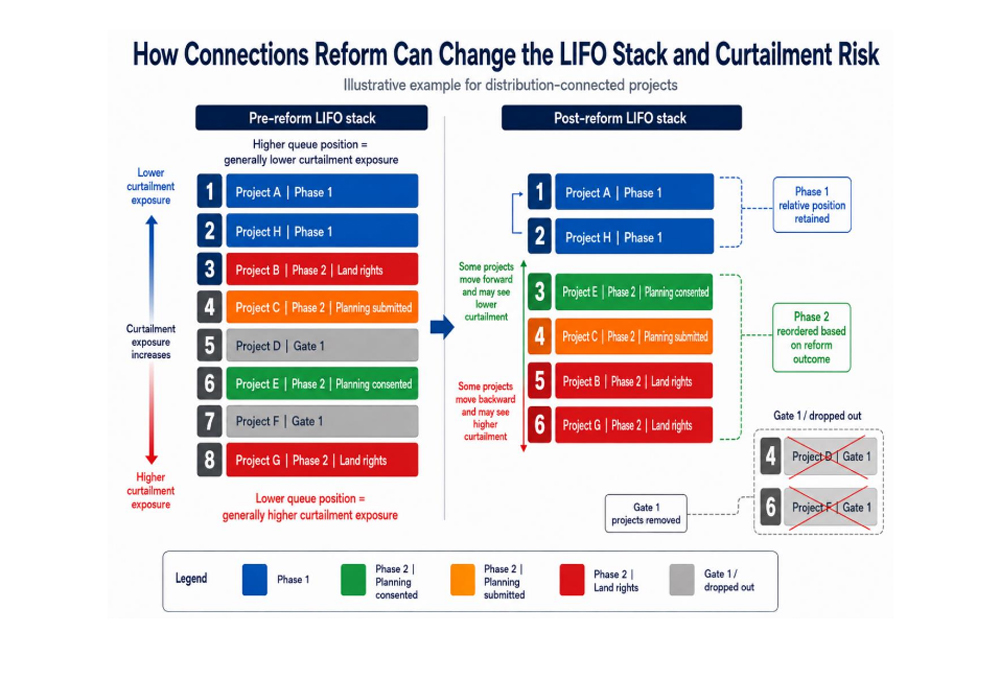
Connections Reform: Why Your Curtailment Forecast May Be Wrong
Connections Reform is reshaping more than grid connection dates. For distribution-connected renewable energy and battery storage projects, changes to the distribution queue and LIFO stack could significantly alter expected curtailment levels. While much of the industry focus has been on Gate 1, Gate 2 and CP2030 outcomes, developers and investors should also consider how post-reform queue reordering may impact project revenues, valuations and financing assumptions.Projects that once appeared low-risk for curtailment could find themselves pushed down the stack, while others may benefit from improved queue positions as less advanced schemes fall away. Understanding where your project sits in the post-reform queue is becoming an essential part of due diligence and project assessment.
June 19, 2026
UK AI Growth Zones: Turning Policy into Deliverable Data Centre Projects
The rollout of UK AI Growth Zones (AIGZs) marks a significant shift in how the UK is seeking to deliver the next generation of AI‑enabled data centres. Led by the Department for Science, Innovation and Technology (DSIT), the programme is explicitly designed to remove key delivery constraints by prioritising access to power, streamlined planning, and investment ready locations capable of supporting large‑scale, energy intensive infrastructure.
April 20, 2026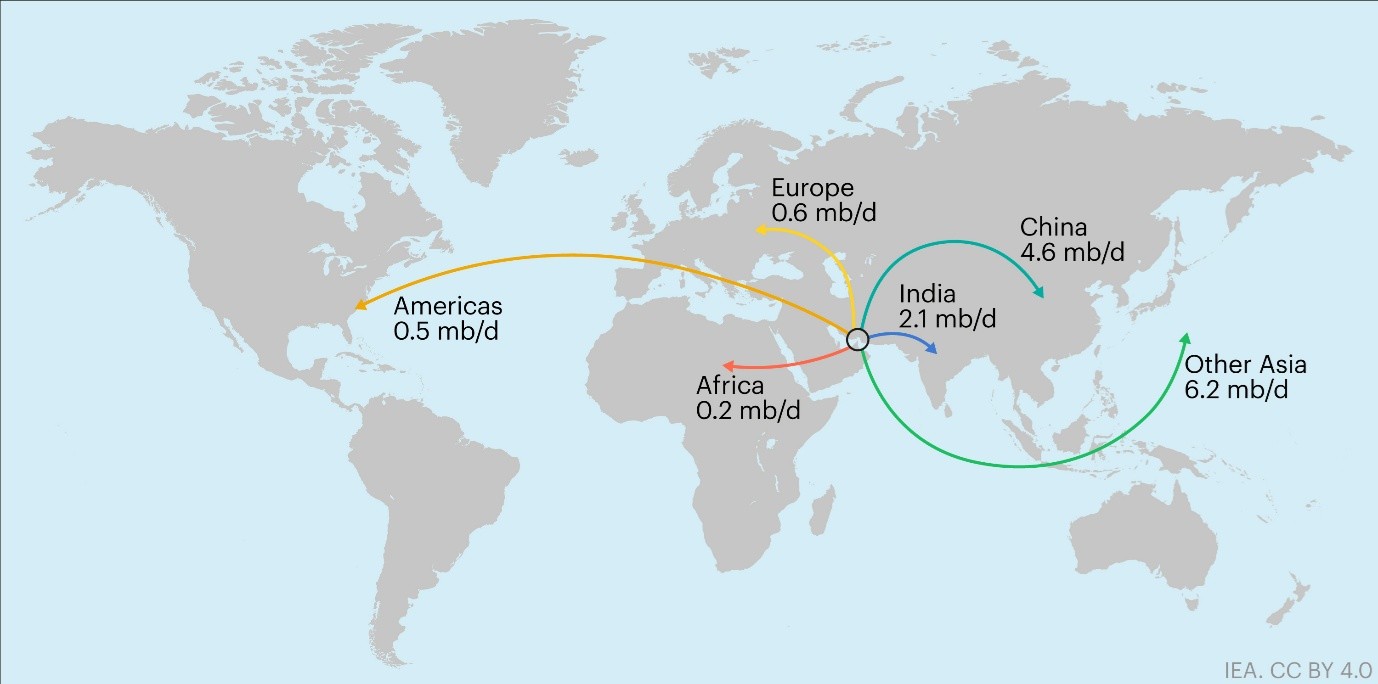
Why the Strait of Hormuz Crisis Will Reshape the Power & Renewables Industry
The Strait of Hormuz crisis highlights how vulnerable the global power and renewables industry remains to oil supply disruption. Around 20–25% of global seaborne oil passes through this narrow shipping route, meaning geopolitical tensions can quickly impact energy markets, logistics costs, and industrial supply chains.Even as electricity generation shifts towards renewables, oil still underpins transport, petrochemicals, and manufacturing processes used to produce solar panels, battery storage systems, transformers, and power electronics. As a result, oil market volatility can increase project costs, extend equipment lead times, and create uncertainty for renewable energy developers worldwide.
April 14, 2026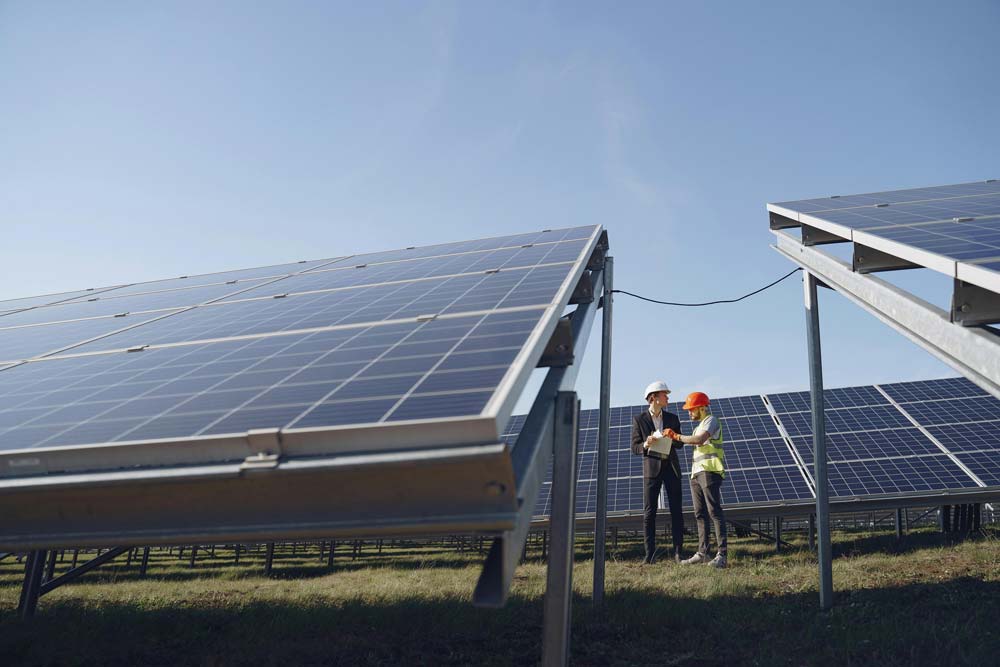
CMP446 Explained
CMP446 raises the TIA threshold from 1MW to 5MW in England and Wales, streamlining grid connections for sub-5MW distributed generation projects. By removing unnecessary transmission impact assessments, CMP446 reduces delays, lowers costs, and creates faster routes to market for developers. But what does this mean for projects already in the pipeline and how will it affect larger schemes? Here’s what developers need to know.
March 3, 2026
Microgrids, Power-to-X, and Data Centres: Salvaging Value from CP2030 Gate 1 Grid Offers
Receiving a Gate 1 connection offer no longer has to signal the end of a viable energy project. As grid timelines stretch into decades, developers are increasingly turning to behind-the-meter solutions such as Power-to-X, private-wire demand, and data centre co-location to unlock revenue sooner. By rethinking how and where electricity is monetised, Gate 1 projects can reduce risk, improve bankability, and retain strategic optionality while awaiting Gate 2 progression.
January 9, 2026
H&MV Engineering Invests In Blake Clough Consulting
H&MV Engineering has announced its investment in Blake Clough Consulting, a specialist energy consultancy focused on grid connection, power systems analysis, and electrical design. Blake Clough will continue to operate independently within the H&MV Engineering Group, enabling both organisations to deliver more comprehensive, end-to-end power engineering solutions for clients across the energy and data centre sectors. The partnership strengthens global capabilities in supporting the transition to Net Zero.
January 6, 2026
All We Want For Christmas Is To Understand the Power Grid
From the quietest demand days of the year to dramatic voltage challenges and the famous New Year’s “midnight surge,” the festive season produces some of the most unusual electricity patterns on the system. As Britain powers down for Christmas and ramps up for the New Year, renewables, flexibility, and smart network management take centre stage. In this festive deep dive, we share curious tales of winter demand, green Christmas miracles, and what they reveal about the future of a decarbonised grid.
December 17, 2025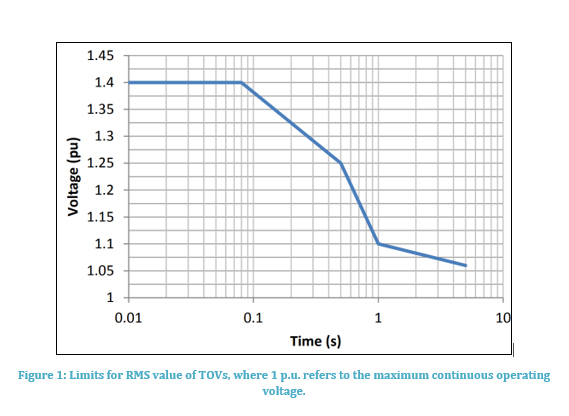
AC Voltage Variation Studies
As the UK transitions to net zero, Battery Energy Storage Systems (BESS) play a crucial role in stabilising the grid. Before connecting, each project must prove it can safely handle voltage disturbances — that’s where an AC Voltage Variation Study comes in. Using advanced EMT simulations, Blake Clough Consulting assesses how plants respond to short-term over-voltages and ensures compliance with Grid Code limits. Our studies give network operators confidence that systems remain stable, secure, and compliant under real-world conditions.
November 7, 2025